Supply Chain
Danny Roman
February 24, 2025

Background
Since February 1st, US-based sellers importing products from China—whether through bulk sea/air freight or cross-border small parcels—have faced significant challenges due to new US tariffs. These changes have had a major impact on the cost structure of businesses that rely on Chinese manufacturing. The key developments are:
10% Additional Tariff on Chinese-Made Goods
A 10% tariff has been imposed on products manufactured in China.Temporary Reinstatement of $800 De Minimis Threshold
The $800 tax-free threshold for small packages has been temporarily reinstated. However, its long-term future remains uncertain. If the T81 simplified clearance policy is revoked again, sellers may have to use T11 clearance, which could result in customs duties and handling fees of up to $10–15 per package.
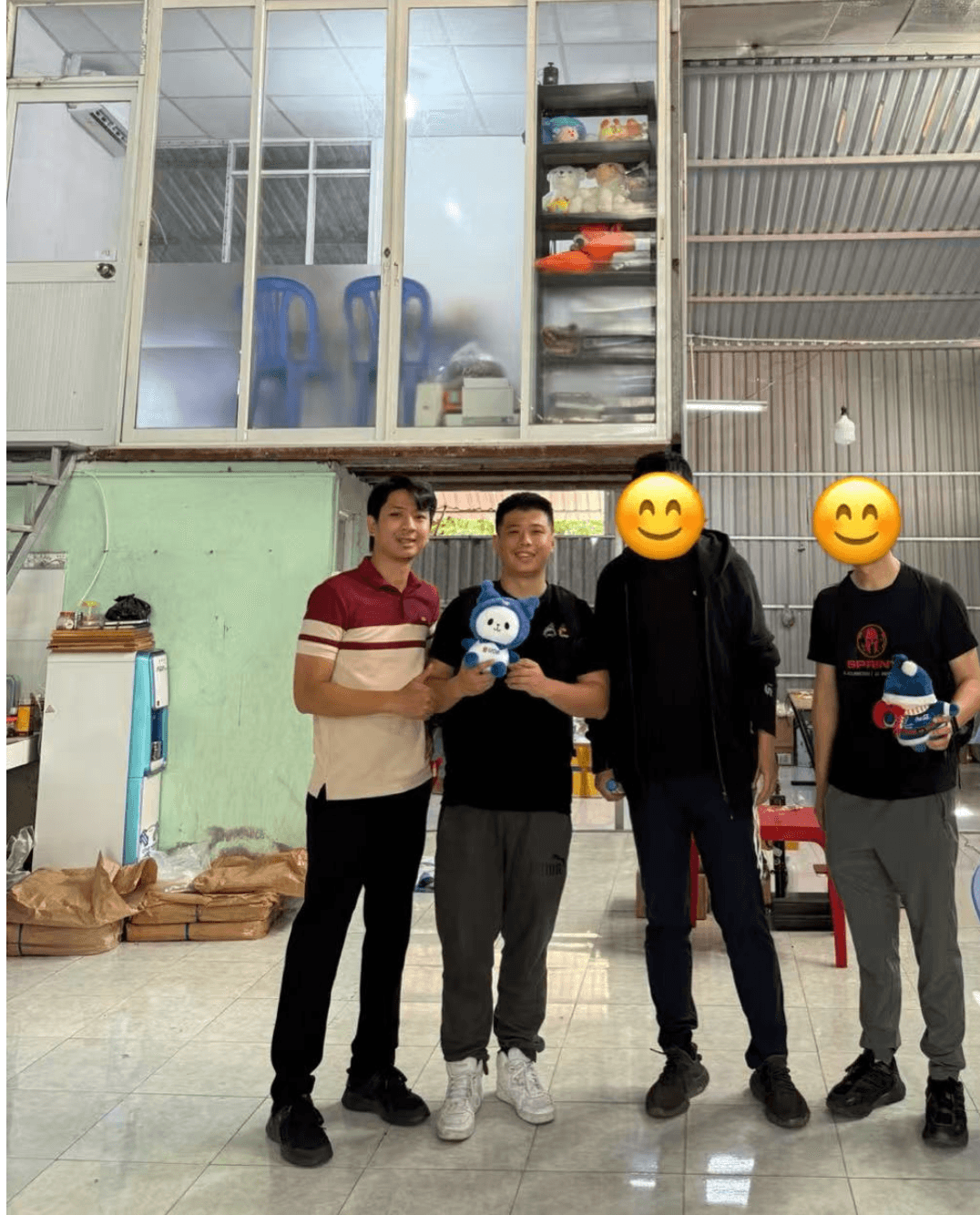
To explore potential solutions, I spent six days in Ho Chi Minh City and Hanoi, Vietnam, meeting with suppliers and logistics experts. Here's a summary of what I learned:
Key Takeaways
1. Costs won’t return to pre-February 2025 levels, but creating a Plan B is critical to mitigate future risks.
2. Adopt a hybrid China-Southeast Asia supply chain model, dynamically shifting production and logistics between regions based on cost advantages. - If transitioning to Vietnam, allow 30–60 extra days for production and shipping due to inefficiencies (e.g., imported raw materials, local traffic congestion, limited international flights).
Optimizing Costs: Production and Logistics Strategies
1. Production: The Vietnam Reality Check
Large Orders Dominate
Factories in Vietnam producing plush toys, apparel, and accessories—such as suppliers for Nike, Calvin Klein, and Disney—are fully booked through late 2025. These factories rarely accept orders below 5,000 units.Labor vs. Efficiency
While labor costs in Vietnam are 10–30% lower than in China, productivity is only 50–70% that of Chinese factories. This disparity leads to 10–15% higher per-unit costs compared to China.When Vietnam Makes Sense
Vietnam is a strong option for large orders (exceeding 5,000 units) and when Chinese tariffs surpass 15%. However, it’s better to avoid for niche products (e.g., enamel pins, vinyl records) where specialized Chinese suppliers still have a dominant edge.
Long-Term Risks
The industrial boom in Vietnam—driven by factories relocating from China—has put pressure on the country's limited land and labor pool, with a population of 100 million. With annual wage growth exceeding 7%, production costs could rise, eventually pushing manufacturers to return to China.
2. Logistics
2.1 Bulk Air/Sea Freight
Avoid Chinese Tariffs
Consider having your products made and shipped from Vietnam. Shipments from Vietnam qualify for 0% additional tariffs when accompanied by a Vietnamese Certificate of Origin (COO). This is a strategic way to avoid the 10% tariff imposed on goods from China.
Shipping from China
If you're continuing to manufacture in China, think about partnering with local third-party warehouses to ship cross-border parcels directly to consumers. This allows you to fully leverage the duty-free policy for international shipments valued under $800. (Note that the $800 de minimis threshold still applies to imports from China, providing significant tax benefits for small packages.)
2.2 Cross-Border Small Parcels
Vietnam’s Advantage
The $800 de minimis threshold still applies when shipping from Vietnam, helping businesses avoid immediate tax burdens.
Drawbacks
Shipping from Vietnam can be 30–50% more expensive than from China. This is due to limited flight availability and stricter dimensional weight pricing. For example, plush toys could see 50–100% higher shipping costs based on their size.
Additionally, shipments sent to the US could experience 3–5-day delays since they often route through third countries before reaching the final destination.
The China-Vietnam Trade-Off
For lightweight, non-bulky items, shipping from China remains cheaper and faster. However, if tariffs continue to rise, Vietnam could offer a viable alternative for mitigating the impact of escalating costs.
Final Advice
● Hybridize your supply chain Split production between China and Vietnam to balance cost, speed, and risk.
● Plan for delays Build buffer time into your operations.
● Audit logistics costs Compare bulk vs. small-parcel options regularly.
Need Help? If tariffs are squeezing your margins, book a free 15-minute consultation with our team. We’ll share insights on:
● Sourcing plush toys, apparel, and accessories from China/Vietnam.
● Optimizing cross-border shipping for Shopify and Etsy stores. Let’s turn trade war challenges into opportunities.
Author: Jacob Li, Founder of Aquamerch, specializing in cross-border e-commerce solutions.